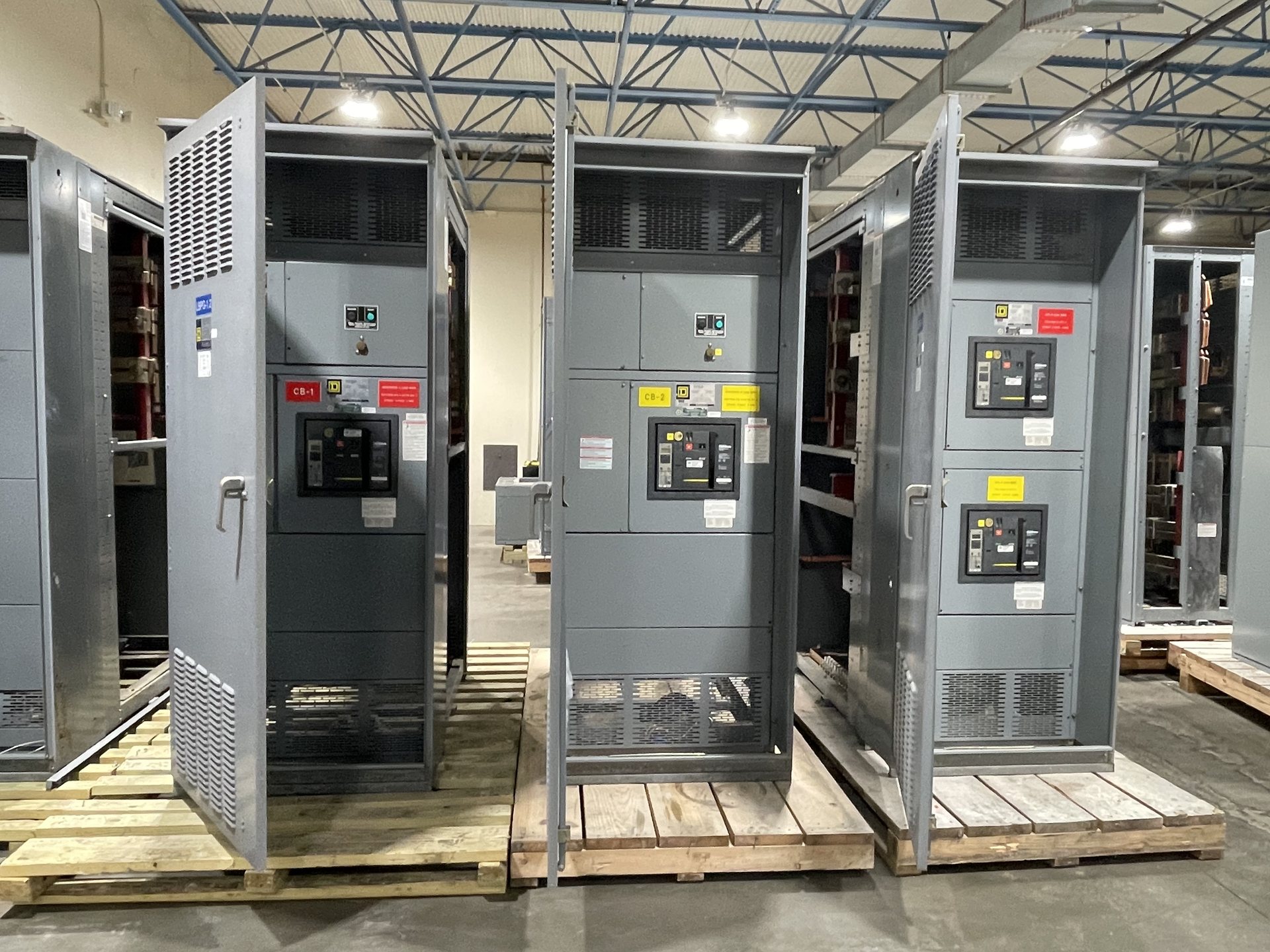
Share the basics
Tell us the equipment type, brand, ratings, location and condition. Photos of the nameplate help us move quickly.
Direct industrial buyer
We buy used and surplus switchgear, including equipment from decommissioned data centers and shut-down power plants. We handle rigging and logistics. Get a cash offer with payment upfront.
We buy only. We handle all rigging and logistics — you get paid.
The buyer's brief —
A nameplate showing 4160 volt can be an important starting point when identifying surplus switchgear. It does not establish the remaining ratings, condition, configuration or suitability of an assembly; include the complete nameplate when safely available. We review each opportunity, make cash offers, pay upfront when the sale is agreed, and do not require the seller to test equipment. We cover all freight and buy all voltage classes.
The marking 4160 volt is one part of an equipment nameplate. Share any available voltage, current, manufacturer, model, section count and interrupting information as marked, because a single figure does not describe an entire electrical assembly. A clear photograph is more useful than a guess. Our team considers all voltage classes and reviews the actual equipment and its condition before making an offer.
We purchase switchboards in complete lineups, sections, and practical partial lots across all voltage classes. Nameplate details such as manufacturer, model, voltage, ampere rating, bus rating, enclosure type, serial number, and date code are useful, along with clear photos of labels, fronts, interiors, mains, feeders, and accessories. The actual condition may range from clean and intact to dusty, modified, stored, or incomplete, so we evaluate what is verifiably present.
A switchboard may include main devices, feeder breakers, metering, wireway sections, pull sections, and spare compartments, but those components should not be presumed. Please identify missing covers, doors, hardware, breakers, lugs, barriers, drawings, and keys. We buy surplus and removed equipment without claiming a particular service history. Seller is paid upfront when a transaction is approved, and every offer is subject to review.
A mixed inventory in Alabama may contain equipment from several projects, manufacturers, or voltage levels. Separate each group by building, lineup, section number, manufacturer, and nameplate rating. Note whether breakers and accessories are matched to the lineup or stored separately. This prevents a buyer from treating unrelated material as one complete system. Photographs can document the condition without requiring operation. The buyer's qualified crews can determine handling needs later, while the seller focuses on accurate identification and authorized release.
When switchgear in Alabama is being removed as part of demolition, establish whether the buyer receives complete sections, selected components, or only loose parts. Confirm what remains attached, what has already been cut or stripped, and whether copper, breakers, relays, and control wiring are included. The buyer can arrange qualified crews, cranes, disconnects, loading, and freight hauling and cover those costs. The seller should identify exclusions clearly and should not be expected to test or restore incomplete equipment.
Condition should be described in practical terms rather than broad labels such as good or used. For equipment in Alabama, note whether it was energized recently, stored indoors, exposed to weather, removed from service, or left in place after a project. Identify visible corrosion, impact damage, missing doors, cracked insulators, removed wiring, contamination, or incomplete sections. The buyer can account for uncertainty when reviewing the material. Seller observations and photographs are useful, but the seller does not need to perform testing or repair work.
Scheduling a pickup in Alabama should be based on mutually confirmed readiness rather than an assumed turnaround. Useful scheduling facts include the seller's access windows, security check-in process, loading restrictions, required insurance documents, contact person, and whether a carrier must be preapproved. The buyer coordinates qualified removal and freight resources after the material and release conditions are confirmed. A flexible schedule is often appropriate for closures, outages, construction work, and facilities where operations must take priority.
For a facility sale in Alabama, ask whether the switchgear is owned outright or subject to a service agreement, lease, finance arrangement, warranty claim, or demolition contract. The seller can provide the name of any other party whose consent is needed. The buyer can make an offer only for material the seller is authorized to release, with payment and pickup tied to agreed documentation. This avoids confusion when equipment remains on leased premises or when multiple contractors are working under separate scopes.
If equipment in Alabama is still connected or positioned near energized systems, the seller should identify the boundary and follow its own lockout, access, and safety procedures. The buyer can arrange qualified crews to perform any required disconnection and handling under the site's approved process. Do not ask the seller to manipulate breakers, remove covers, verify absence of voltage, or perform testing for an inquiry. Seller-provided access information and a controlled handoff are sufficient for the buyer to plan the next step.
Decommissioned data centers can contain substantial electrical equipment even after servers and racks have been removed. In Alabama, an inventory may include service switchgear, generator paralleling gear, static transfer switches, distribution sections, panelboards, breakers, transformers, and battery-related equipment. Describe what remains, where it is located, and whether the rooms are dry and accessible. Photos and nameplates are preferable to assumptions about capacity. The buyer handles qualified evaluation and removal arrangements without requiring the seller to test equipment.
Documentation can make an equipment review in Alabama more efficient. Helpful items include one-line diagrams, equipment schedules, original submittals, maintenance notes, removal drawings, photographs from service, and records showing what was replaced or salvaged. These documents are informational and do not replace a qualified inspection. The seller need not recreate missing records or conduct tests. The buyer can use the available information to determine whether to proceed, what crews are needed, and how the material should be identified at loading.
A clear handoff —
Send the details available to you. We buy based on practical information, not a drawn-out seller testing process.
Tell us the equipment type, brand, ratings, location and condition. Photos of the nameplate help us move quickly.
We review what you send and make a straightforward cash offer for the equipment we can buy.
Once you accept, we handle the crane, rigging, disconnects, loading, freight and hauling. Payments are made upfront.
From shutdown to handoff —
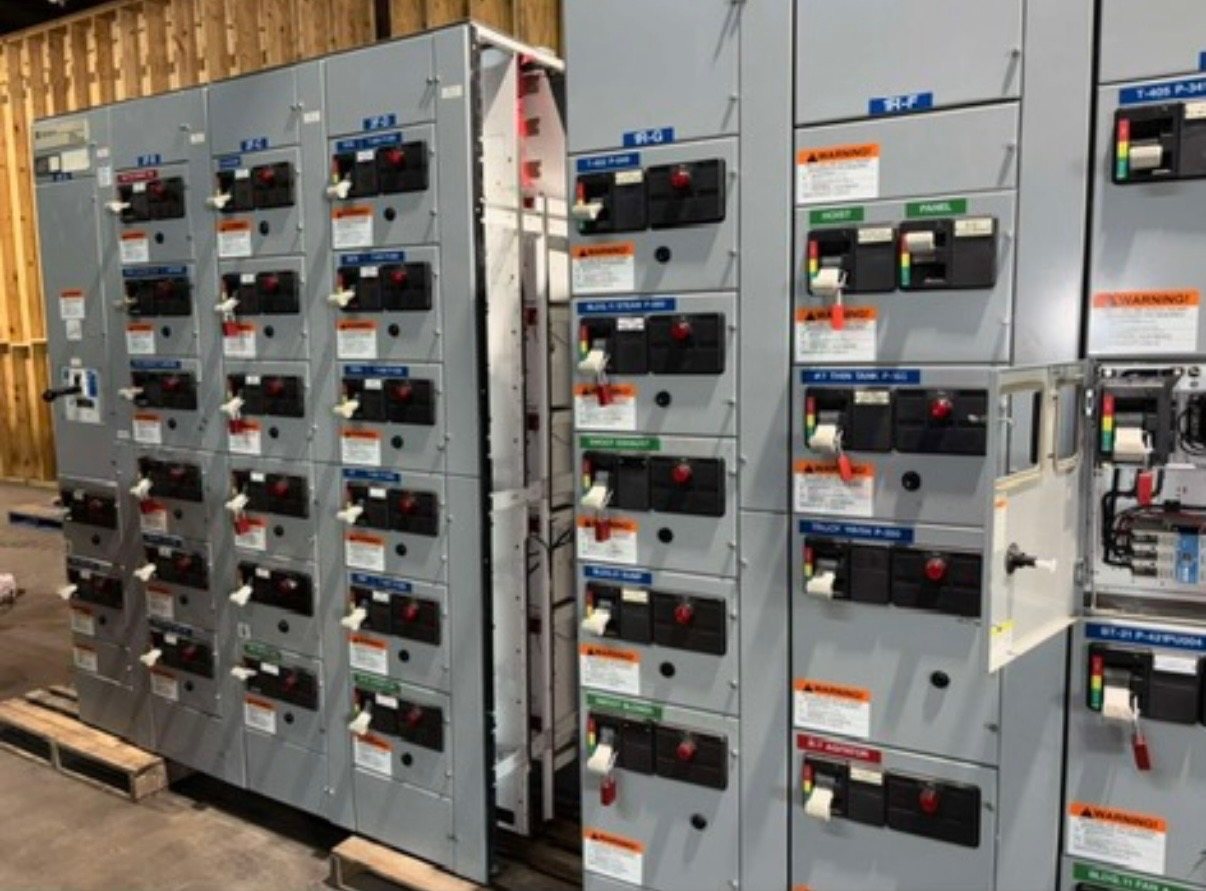
We buy electrical switchgear out of decommissioned data centers and shut-down power plants. From a single unit to a facility-wide lineup, tell us what you have and where it is located.
We handle all rigging and logistics. Crane, rigging, disconnects, loading, freight and hauling are on us. The seller does nothing but get paid.
After a sale is agreed, provide authorized site access and follow site safety rules; our qualified crews handle the work. You do not have to test the equipment before requesting an offer.
Start here —
Use the form for a full request, or call/text a nameplate photo. We buy switchgear from decommissioned data centers and shut-down power plants, plus related equipment across all voltage classes. Crane, rigging, disconnects, loading, freight and hauling are on us; the seller does nothing but get paid.